Register

Login
analysis-volunteering

Analysis Volunteering

Baseline Studies on Volunteering Development in the Americas

The Baseline Studies on Volunteering Development in the Americas are part of the ongoing efforts of the IFRC Regional Office to strengthen volunteering structures across the region. These annual studies provide an updated diagnosis of how National Societies manage and support their volunteer base, offering valuable insights that contribute to regional and local strategies for growth and resilience.

Volunteers are the driving force of the Red Cross, embodying one of the Fundamental Principles of the Movement and making humanitarian action possible in countless communities. Understanding their realities, challenges, and achievements allows National Societies to adapt their strategies to evolving social contexts and ensure that voluntary service continues to grow sustainably.

This initiative builds on previous studies carried out in past years and continues to serve as a key tool for decision-making, planning, and the promotion of stronger, more inclusive volunteerism in the Americas.

Volunteering

Volunteering from 2022 to 2024 in the Americas was systematized thanks to the collaboration of 27 National Societies: Antigua & Barbuda, Argentina, Bahamas, Barbados, Belize, Bolivia, Canada, Chile, Colombia, Costa Rica, Dominica, Dominican Republic, Ecuador, El Salvador, Grenada, Guatemala, Guyana, Honduras, Jamaica, Panama, Paraguay, Saint Kitts and Nevis, Saint Lucia, Saint Vincent and the Grenadines, Suriname, Uruguay and Venezuela.

It should be noted that not all National Societies respond to the survey every year, which may cause some variation in the results.

General information of the national volunteer management and the National Society

Number of volunteers

Based on data from the IFRC Databank and the information collected through the annual surveys conducted for the Baseline Studies, it is possible to observe how the number of volunteers committed to the principles and values of the Red Cross has evolved over the years:

Number of Volunteers of the Red Cross National Societies of the Americas (2022–2024) 

The strength of our network lies in the thousands of volunteers working side by side to serve their communities.

volunteers (approx.) committed to humanity across the Americas in 2024
0

(An estimate based on data from the IFRC Databank and BLS)

Volunteering focal point

To continuously strengthen national and local structures, having permanent and paid focal points is one of the priorities of the Volunteer and Youth Development Unit. From 2022 to 2024, this goal has evolved in the following ways:

Percentage of National Societies with a Volunteering Focal Point (2022–2024) 

*Percentages calculated based on all National Societies in the Americas. 

As of 2024, only half of the National Societies that responded to the annual survey have staff dedicated exclusively to serving as volunteering focal points:

Percentage of National Societies Reporting Having Staff Serving Exclusively as Volunteering Focal Points (2022–2024) 

*Percentages calculated based on responding National Societies only. 

Volunteer database

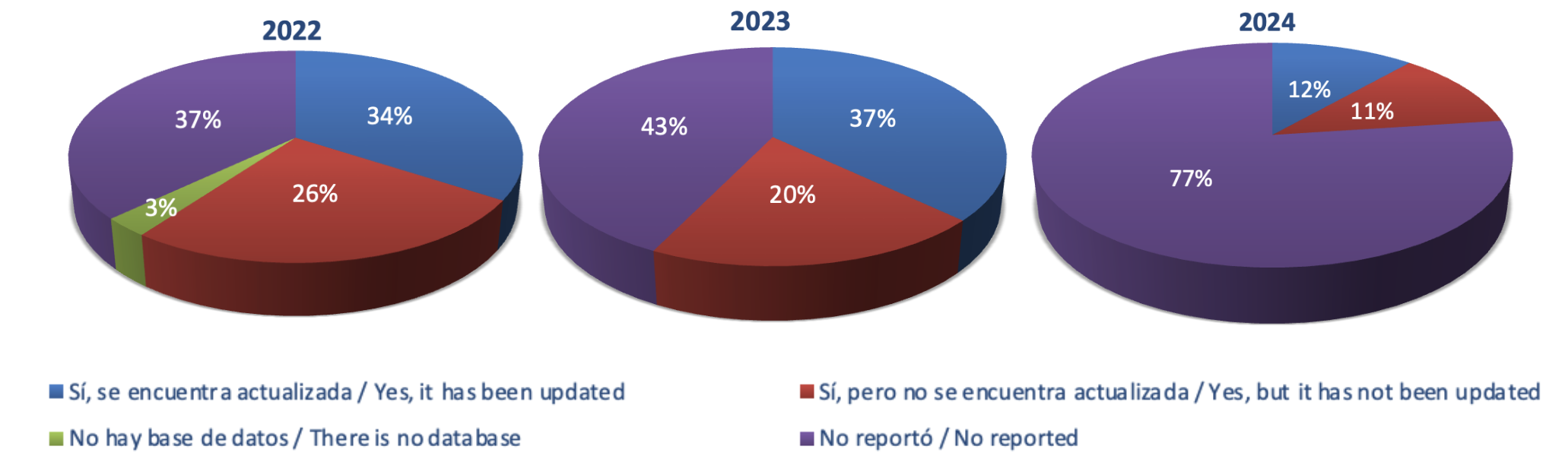
Based on the available data, the proportion of National Societies reporting an up-to-date volunteering database remains low, while outdated systems persist. In 2024, non-reporting surged sharply, highlighting the need to strengthen data management and survey participation to ensure more reliable insights across the region.

Percentage of National Societies with a Volunteering Database (2022–2024) 

*Percentages calculated based on all National Societies in the Americas. 

Volunteer programs offered by National Societies

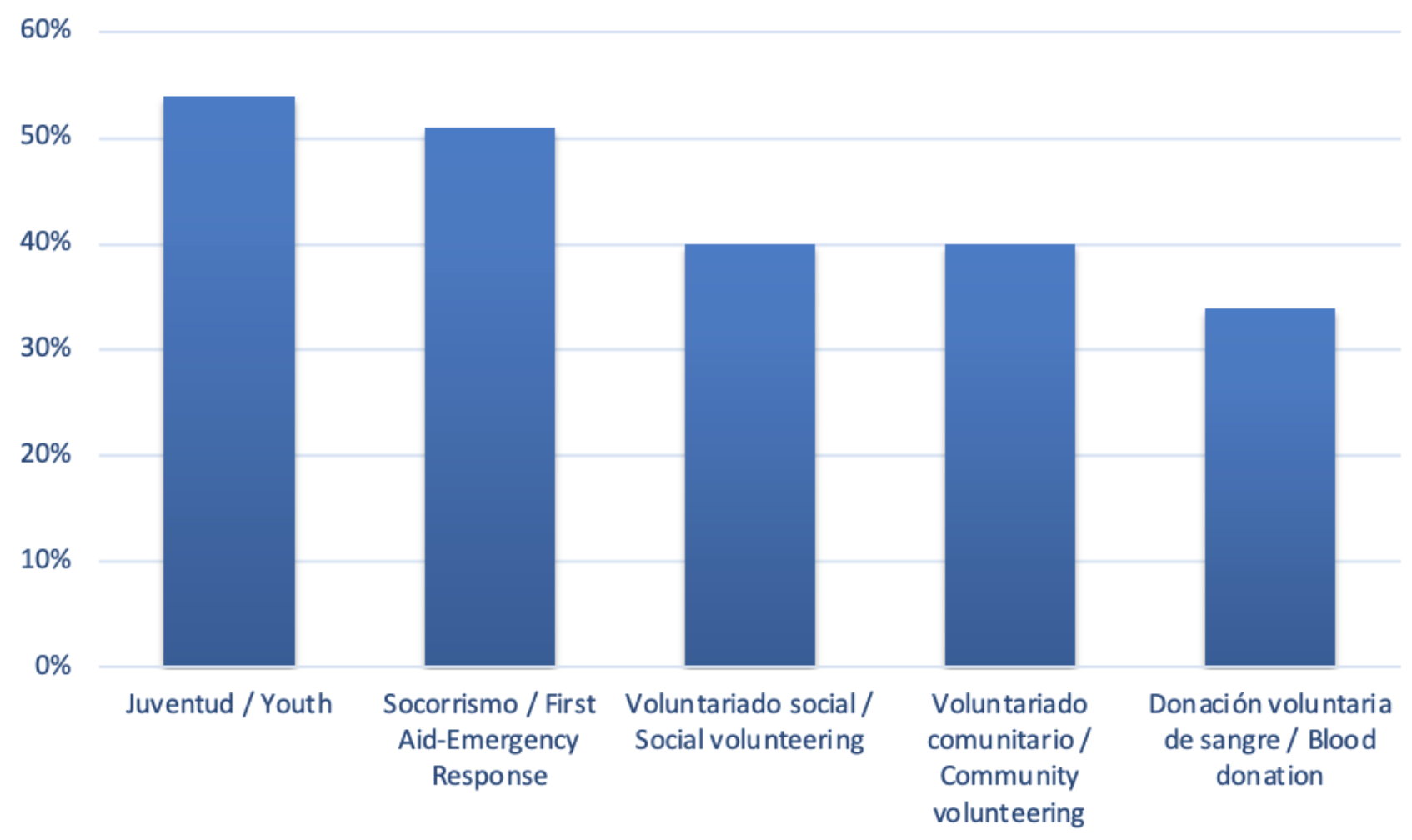
National Societies are constantly adapting their programs and activities. Over the years, the most common have been Youth, First AidEmergency Response, Community volunteering, Social volunteering and Blood donation. At the same time, many National Societies have continued other types of volunteering programs, ensuring diversity in opportunities. The chart below presents the percentage of key volunteering programmes reported by National Societies participating in the 2024 annual survey:

Percentage of Key Volunteering Programmes Reported by National Societies in 2024  

*Percentages calculated based on responding National Societies only. 
“It’s minimum input, maximum return. You may never meet the person you help, but you could be the reason someone gets to live another day.”

Guidelines and policies of National Societies

Policies on Volunteering

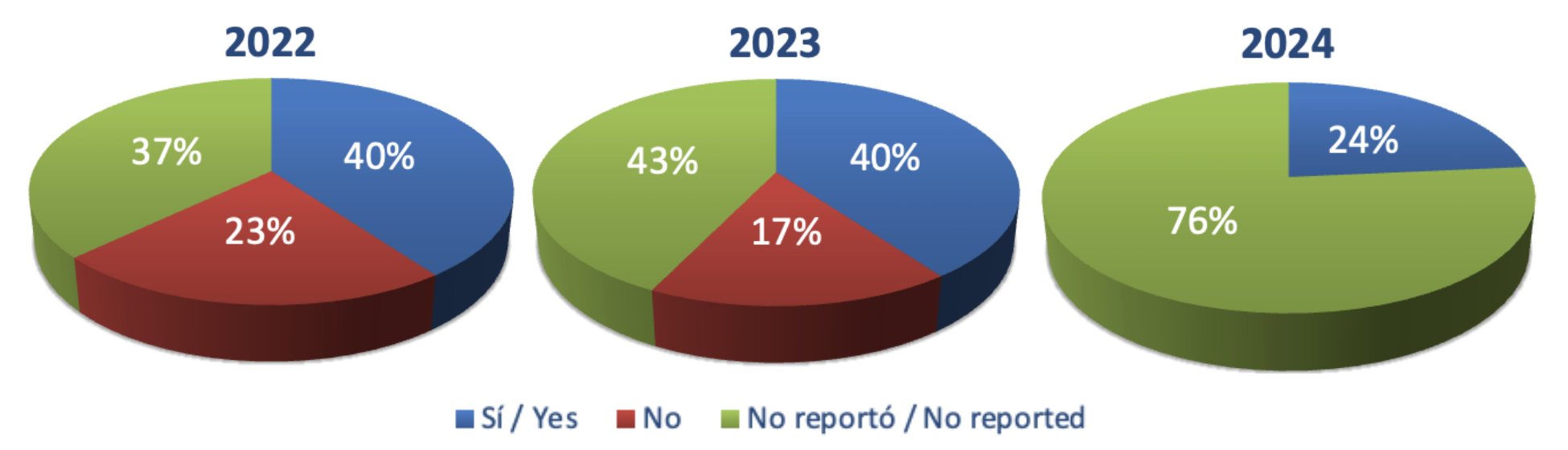
Across the period under review, reporting on Volunteering Policies among National Societies highlights a mixed pattern of engagement and formalization. While a portion of National Societies consistently indicate having established policies, a notable share either do not have policies in place or do not participate in the annual survey, as shows by the graphs below:

Percentage of National Societies with Volunteering Policies (2022–2024)  

*Percentages calculated based on all National Societies in the Americas. 

This suggests that, although there is a foundation of formalized volunteering frameworks, gaps remain in both policy adoption and data reporting, underscoring the need to strengthen guidance, support, and monitoring to ensure comprehensive coverage and effective governance of volunteering across the region.

Volunteer evaluation system

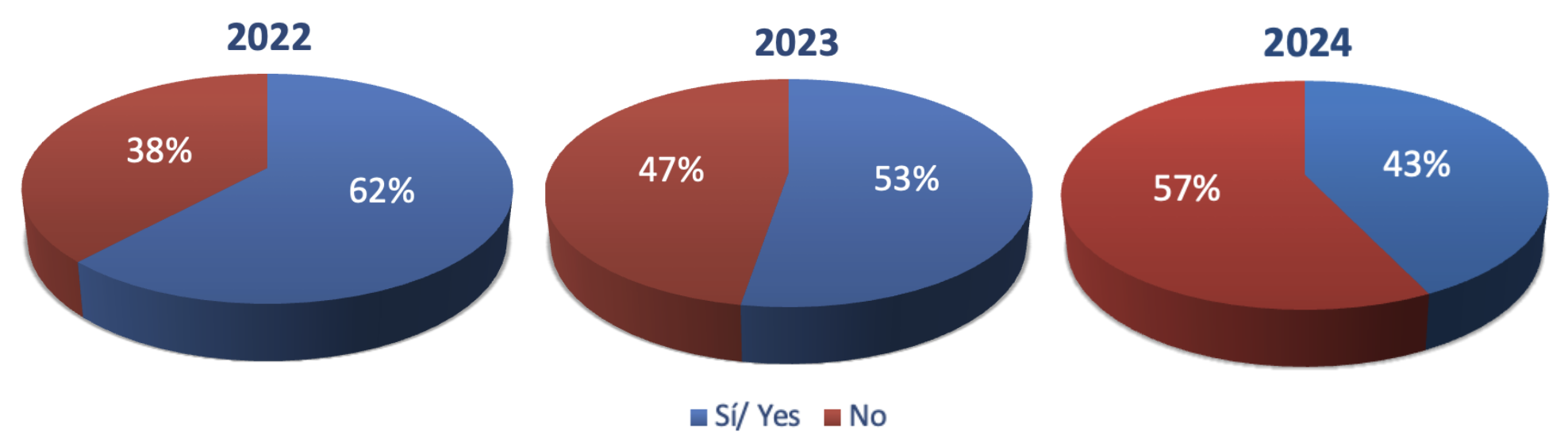
Based on the available data, the implementation of Volunteer Evaluation Systems among responding National Societies shows a gradual decline in adoption and formalization. While some NS have established mechanisms to assess and monitor volunteer performance, a growing proportion indicate that such systems are not in place.

Percentage of National Societies Reporting on Volunteer Evaluation Systems (2022–2024)  

*Percentages calculated based on responding National Societies only. 

Ensuring that evaluation processes are systematically applied can provide critical insights into volunteer performance, support continuous improvement, and enhance the overall quality and effectiveness of volunteer engagement across the region.

Volunteer recognition 

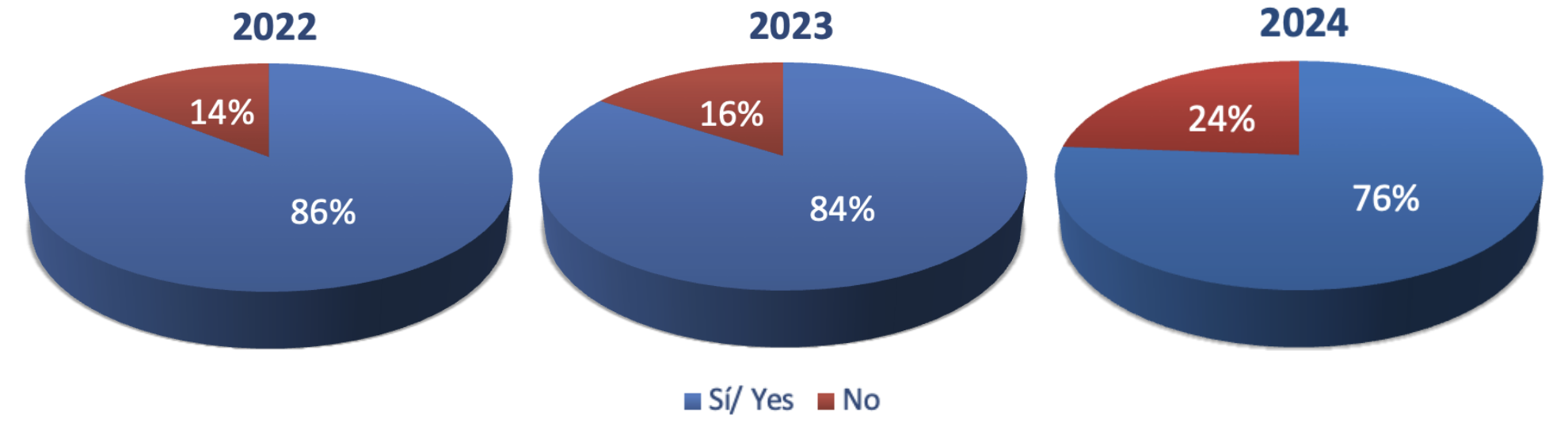
The implementation of volunteer recognition and motivation systems among responding National Societies appears to show a downward pattern over the period under review. While this remains a key strength among National Societies, as effective recognition practices support volunteer motivation and retention, variations in survey participation across years warrant cautious interpretation of trends and highlight the need to encourage broader engagement in annual reporting.

Percentage of National Societies Reporting on Volunteer Service Appreciation Mechanisms (2022–2024) 

*Percentages calculated based on responding National Societies only. 

Budget

Regarding the annual budget dedicated to strengthening volunteering, the available data shows some variation among responding National Societies. The substantially lower number of responses for this indicator in the most recent reporting cycle limits the ability to draw robust conclusions about trends, and observed changes should therefore be interpreted with caution.

Percentage of National Societies Reporting an Annual Budget for Strengthening Volunteering (2022–2024) 

*Percentages calculated based on responding National Societies only. 

Insurance for volunteers

Insurance for all volunteers 

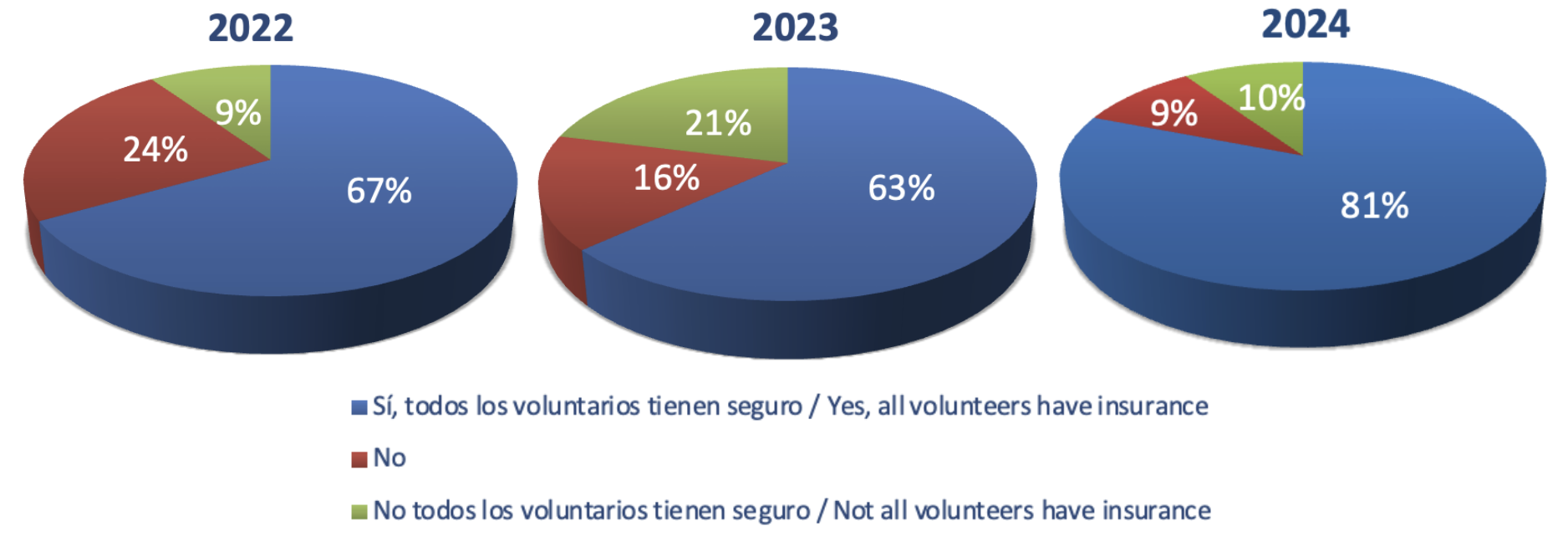
For the following factor of study, most responding National Societies report that all volunteers are covered by insurance, indicating a generally strong commitment to volunteer protection. A smaller proportion of NS indicates that only some or none of their volunteers are insured, highlighting areas where coverage could be expanded. Overall, the data suggest that volunteer insurance remains a key component of volunteer management, ensuring safety and security for those contributing to National Society operations. 

Percentage of National Societies Reporting Volunteer Insurance Coverage (2022–2024) 

*Percentages calculated based on responding National Societies only. 


Final Considerations

Volunteering remains a cornerstone of the Red Cross and Red Crescent in the Americas, with National Societies continuously adapting programs and strategies to meet evolving community needs. Across the region, strengths such as established volunteer recognition practices, insurance coverage, and the presence of dedicated focal points demonstrate a solid foundation for volunteer engagement. 

At the same time, the data highlight persistent challenges: gaps in up-to-date volunteer databases, uneven adoption of evaluation systems and formal policies, and variable survey participation limit the ability to fully assess trends and needs. These findings point to opportunities for National Societies to strengthen data management, enhance reporting, and ensure consistent application of volunteer management practices. 

Overall, the Baseline Studies underscore the value of evidence-informed decision-making: investing in volunteer structures, recognition, and protection not only supports those who serve but also contributes to the resilience, effectiveness, and sustainability of National Societies across the Americas.