Register

Login
analysis-youth

Analysis Youth

Baseline Studies on Youth Engagement in the Americas

  The Baseline Studies on Youth Development in the Americas are a crucial part of the IFRC Regional Office’s ongoing efforts to strengthen youth structures across the region. These annual studies provide an updated diagnosis of how National Societies manage, support, and ensure the meaningful participation of their young members, offering essential insights for regional and local strategies focused on growth, leadership, and resilience.

Youth are the lifeblood of the Red Cross and Red Crescent Movement, embodying the future of humanitarian action and making an impact possible in countless communities. Understanding their realities, challenges, and contributions allows National Societies to adapt their strategies to evolving social contexts and ensure that youth participation remains a driving force for innovation and sustainability. 

This initiative builds on previous studies and continues to serve as a fundamental tool for decision-making, planning, and the promotion of a stronger, more inclusive youth movement with greater capacity for influence throughout the Americas.
Youth

The systematization of youth data between 2022 and 2024 was made possible through the valuable collaboration of 31 National Societies across the Americas. Participating countries include: Antigua and Barbuda, Argentina, Bahamas, Barbados, Belize, Bolivia, Canada, Chile, Colombia, Costa Rica, Dominica, Dominican Republic, Ecuador, El Salvador, Grenada, Guatemala, Guyana, Honduras, Jamaica, Mexico, Nicaragua, Panama, Paraguay, Saint Kitts and Nevis, Saint Lucia, Saint Vincent and the Grenadines, Suriname, Trinidad and Tobago, Uruguay, and Venezuela.

It is important to note that the composition of the responding National Societies varied year-to-year, which must be considered when analyzing the consistency of results over time.

General information of the National Youth Directorate and the National Society

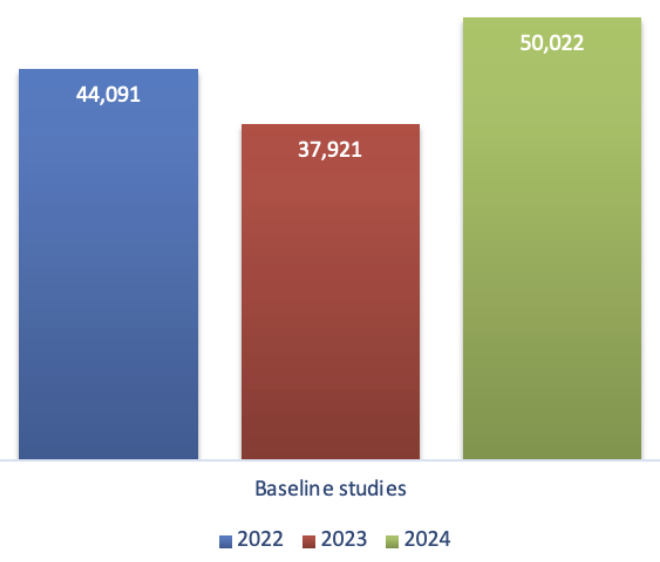
Number of Youth Program volunteers 

Based on the information collected through the annual surveys conducted for the Baseline Studies, it is possible to observe how the number of volunteers from the Youth Program has evolved over the years:

Number of Youth Program Volunteers of the Red Cross National Societies of the Americas (2022–2024) 

Youth volunteers (approx.) committed to achieving positive changes in their communities during 2024
0

(An estimate based on data from the BLS)

Youth focal point 

Across the period under reviewthe majority of National Societies that responded to the surveys reported having a dedicated youth focal pointunderlining the ongoing emphasis on youth coordination. Variations in survey participation highlight the need to encourage broader and more consistent reporting to capture a comprehensive regional picture. 

Percentage of National Societies with a Youth Focal Point (2022–2024)

*Percentages calculated based on all National Societies in the Americas.

In 2024, while a notable number of responding National Societies (26) confirmed having a youth focal point, only almost half (12) reported that this role is dedicated full-time to youth coordination, highlighting an ongoing opportunity for NS to strengthen the focus of youth focal points. 

Youth database  

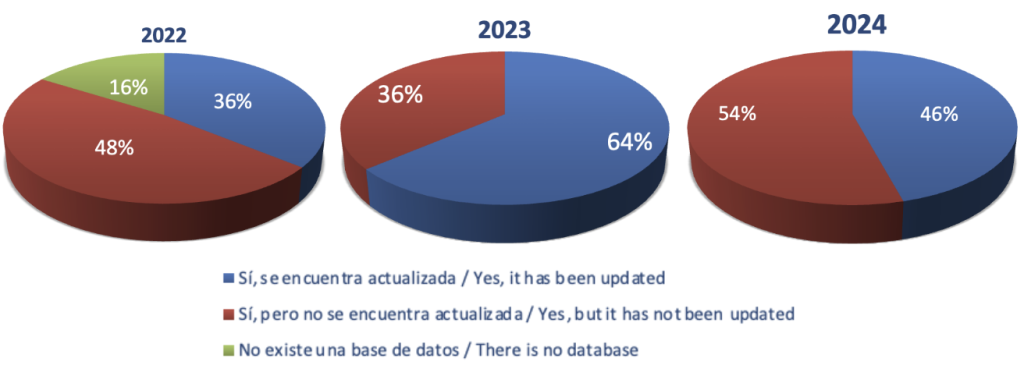
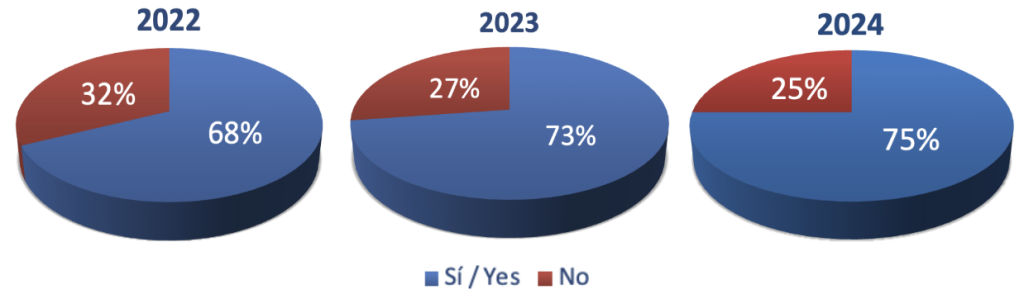
Even though most National Societies have youth databases, many remain outdated or incomplete. Strengthening database management and ensuring regular updates could enhance understanding of youth involvement and support more effective program planning. 

Percentage of National Societies with a Youth Database (2022–2024) 

*Percentages calculated based on responding National Societies only.

Youth on the board of directors 

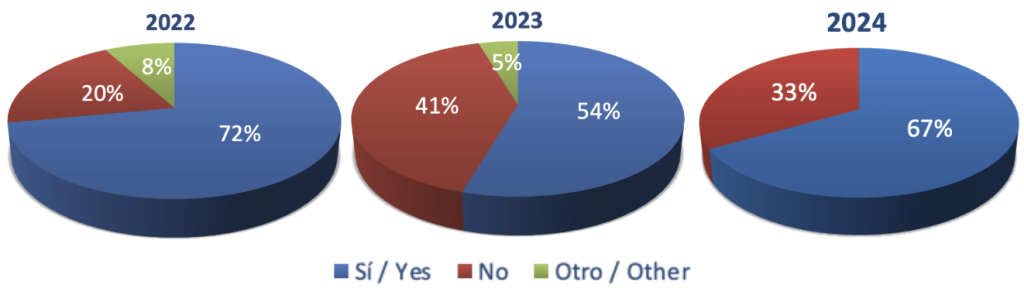
Having youth representatives on the National Society’s board of directors is key not only for representation and inclusionbut also to foster innovationsustainability, and legitimacyThe following data highlights how this is reflected across the region: 

Percentage of National Societies with Youth Representation on the Board of Directors (2022–2024). 

*Percentages calculated based on responding National Societies only. 

Participation of youth on National Society boards shows steady engagement over the yearsWhile many include young voices in decision-makingthere remains room to expand representation and ensure youth perspectives are consistently incorporated at all leadership levels.

Youth in resource mobilization  

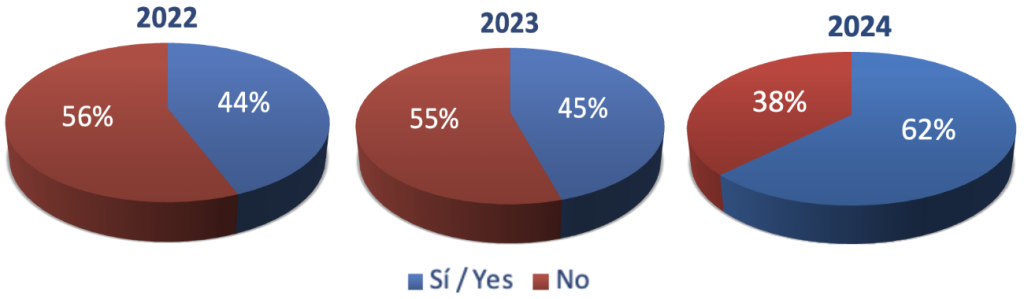
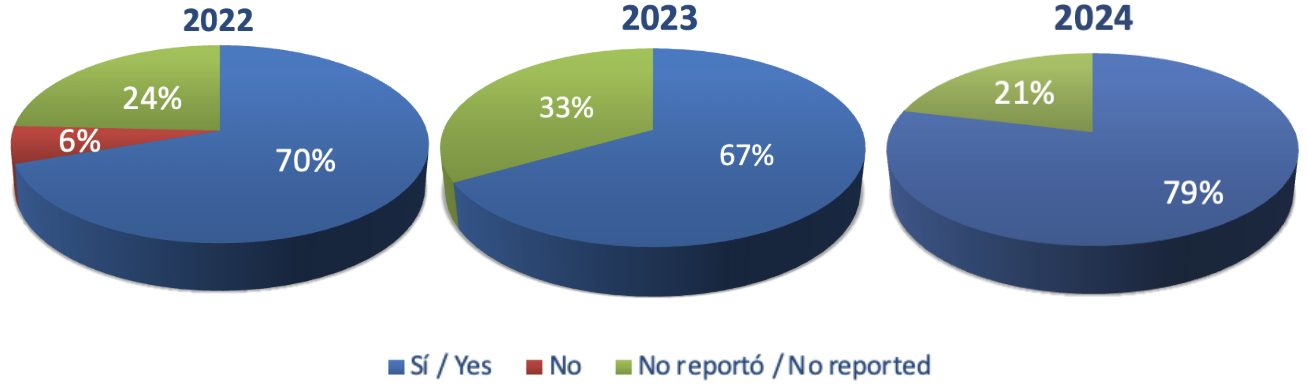
Youth involvement in resource mobilization reflects a dynamic engagement pattern. While many National Societies actively include young people in fundraising and resource initiatives, the fluctuations in reporting highlight the potential to standardize youth participation and ensure it remains a strategic component across different programs.

Percentage of National Societies Involving Youth in Resource Mobilization (2022–2024) 

*Percentages calculated based on responding National Societies only. 
“Volunteering with the Red Cross means dedicating my time, effort, and heart to helping others without expecting anything in return; it is an act of solidarity and empathy that transforms lives and contributes to creating a positive change for everyone.”

Guidelines and policies of National Societies

Youth policy 

National Societies are increasingly formalizing their commitment to youth through dedicated policies. While more than half now report having their own youth policy, some still rely solely on the IFRC framework or have no policy in place. Strengthening policy adoption and alignment can help ensure consistent guidance and support for youth engagement across all National Societies. 

Percentage of National Societies with Youth Policies (2022–2024) 

*Percentages calculated based on responding National Societies only. 

Young volunteer recognition

Recognition of young volunteers remains a notable strength across responding National Societies. Many have implemented motivation systems and strategies to involve youth in their programs, though fluctuations over the years suggest opportunities to reinforce consistency and ensure that young people’s contributions are regularly acknowledged and valued.

Percentage of National Societies with Young Volunteer Recognition Mechanisms (2022–2024) 

*Percentages calculated based on responding National Societies only. 

While the percentage of National Societies reporting youth recognition mechanisms shows a slight decline from 2022 to 2024, the actual difference in affirmative responses is minimal (18 vs. 16), highlighting the need to interpret year-to-year trends with caution.

Budget 

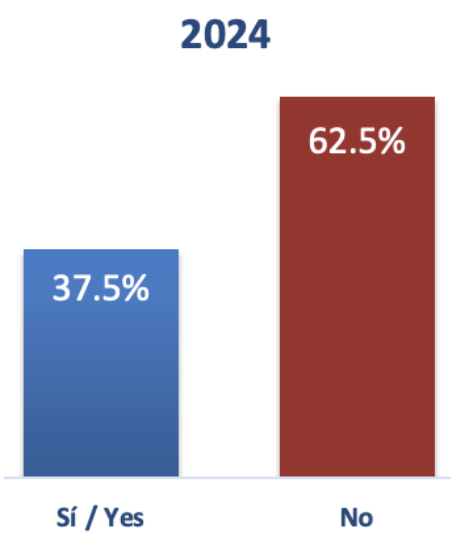
Since 2024, National Societies in the Americas have been asked whether they have financial resources specifically allocated for youth engagement. The first results highlight a major challenge: only a minority of responding National Societies reported allocating a dedicated budget for it, pointing to an opportunity to strengthen financial support and expand youth initiatives.

Percentage of National Societies Allocating Financial Resources to Youth Engagement (2024) 

*Percentages calculated based on responding National Societies only. 

Youth in the strategic plan

Youth inclusion in National Societies’ strategic plans remains consistently high, demonstrating widespread recognition of the importance of integrating young people into organizational priorities. 

Percentage of National Societies Including Youth in Their Strategic Plan (2022–2024) 

*Percentages calculated based on responding National Societies only. 

Even considering that the number of respondents varied across years and that not all National Societies responded each year, the results suggest stability, indicating that youth engagement continues to be embedded in long-term planning.

Youth Engagement strategy

The adoption of youth engagement strategies among National Societies has increased steadily, showing a stronger commitment to actively involve young people in programs and projects. These results highlight positive progress, even though the number and composition of respondents varied across the years.

Percentage of National Societies with a Youth Engagement Strategy (2022–2024) 

*Percentages calculated based on responding National Societies only. 

Opportunities for Youth

Leadership courses 

Regarding the opportunities offered to youth by the National Societies, they were asked whether they provide training courses aimed at strengthening young people’s leadership skills.

Percentage of National Societies Offering Leadership Courses for Youth (2022–2024) 

*Percentages calculated based on responding National Societies only. 

By 2024, most responding Societies reported providing such coursesreflecting a consistent commitment to youth development and the cultivation of future leaders.

YABC Initiative  

Training in the Youth as Agents of Behavioural Change (YABC) strategy remains limited among National Societies. Across the three years under review, while some volunteers and staff participated in capacity-building workshops, the majority of National Societies responding to the annual surveys reported no engagement with YABC initiatives, highlighting a clear opportunity to expand participation and strengthen youth-focused behavioral programs.

Percentage of National Societies with Staff and/or Volunteers Trained in the YABC Initiative (2022–2024) 

*Percentages calculated based on responding National Societies only. 

.

Final Considerations 

The data from 2022–2024 reveals a critical reality: while youth are celebrated as the lifeblood of the Red Cross in the Americas—with 50,000 volunteers driving impact—there is a persistent gap between institutional recognition and practical support. Although youth engagement is high in strategic plans, the lack of dedicated budgets in most National Societies remains a significant barrier. To move beyond symbolic inclusion, National Societies must transition from viewing youth as a volunteer force to treating them as a strategic investment that requires its own financial and administrative autonomy. 

Structurally, the presence of youth on boards is a win for legitimacy, but it must be backed by more robust coordination. The fact that fewer than half of the youth focal points are full-time positions suggests that youth leadership is often managed as a secondary priority. For the Movement to stay relevant, National Societies need to professionalize this support, ensuring that those leading the youth sectors have the time, data, and tools—such as updated databases and specialized training like YABC—to drive real innovation. 

Ultimately, the challenge for the Americas is to move from having young volunteers to giving them real authority. It is time to close the gap between being part of the group and being part of the decisions. Recognition systems and leadership courses are strong foundations, but the next step is ensuring youth have a decisive voice in resource mobilization and governance. By strengthening financial commitments and providing stronger leadership roles, National Societies will not just be preparing for the future; they will be empowering the leaders who are already shaping the humanitarian landscape today.